I came across a story in the Detroit Free Press yesterday. It really put me in mind of my novel, Meridian. If you have a few moments, I encourage you to read the article. It has all the classic elements of the "Northern Gothic" I was aiming for in Meridian. A tale like this reminds us that murder is not just a problem for big cities. The motivations of anger and betrayal and revenge can be found where even a few hundred people live.
Free Press Story On Murder In The UP
The seventh and last William Theodore Clemmons novel has arrived. You can now purchase Home at Amazon in either paperback or ebook form. I want to thank Teddi Black for another outstanding cover. I really like the way the Home cover turned out. The off-kilter compass seeming to float in an eternal blue background is terrific. So, head over to Amazon and get your copy. Let me know what you think.
Link To Amazon To Buy Home.
The publication of my last novel, Home, is getting closer. I have the manuscript back from the proofreaders. Teddi Black is working on the cover. If things go well, perhaps the book will be available as soon as November. Keep checking back here for more developments. I'll have more to say about Home once we get it out there to the public. One interesting thing that occurred to me as I was reviewing the book was how autobiographical it is. By that I mean that Home is about a fellow who is lost and keeps walking through his neighborhood in Detroit. He is trying to figure out where he is and where belongs. He wants to know why something that had always been familiar is now foreign. I think this is a metaphor about what I did in writing these seven novels. Taken together, the books are a journey through Detroit, looking for meaning. In the last book, the journey ends. What started with the Hero's Quest in the first book, finally concludes. Little wonder that the idea for Home, or at least its conclusion, came to me while I was still writing Smoke. Even then, I suppose, I could see to the conclusion. I just needed to get there. As for finding meaning, time will tell.
NPR had an interesting story about the struggles of literary writers to sell books. According to this report, the books on the short list for the Man Booker prize in England are simply not selling. A well-known serious writer named Anne Enright sold only 9,000 copies of her latest book in England. Tom McCarthy, the author of Satin Island, sold 3,500 copies of that title. A literary agent named Jane Dystel claimed that for a literary author to sell 25,000 books would be "sensational." The decline in book sales seems congruent with a sped-up and more superficial world. I wonder how many readers are left who can commit to a lengthy novel that will challenge him or her to do such things as pay close attention and think deeply. That is hard to accomplish with your phone alerting you to a new Facebook update or email about every 20 seconds. Writing literary fiction in the 21st Century may prove to be an abstruse exercise done primarily for the sake of doing it. Fame, and apparently fortune, are not rewards for writing these days. The serious writer of this era may be creating works that are noted by an ever-smaller group of people, mostly academics. That said, there is no reason not to write literary fiction. Tell your story the best way you know how. Put it up on Amazon. Then go to work because that is the only way you are going to pay your rent.
NPR Story On Book Sales
As you will recall, the lawyer who handles the affairs for Harper Lee floated the idea over the summer than there might even by a third novel out there. This fine barrister, Tonja Carter, felt the need to call in an expert to determine if the manuscript pages she found were, indeed, a new novel. Sadly for Ms. Carter, and all the millions of dollars she envisioned flowing towards her, the expert would not play along. The expert, James S. Jaffe, found that the manuscript was just another version of To Kill A Mockingbird. It is nice to see one person with some integrity involved in this sordid mess. So, at least until Ms. Carter finds another manuscript in Harper Lee's cookie jar, this should be the end of any additional titles coming out.
News Flash: Now there is talk of another Harper Lee book, this one a true crime story.
The most interesting question for Ms. Carter might be this: if Harper Lee is really in her right mind, why did you have to bring in Mr. Jaffe? Why didn't Mr. Jaffe speak with Harper Lee? I mean, isn't that the most straight-forward way to address the question of the third novel? Did Harper Lee go from compos mentis to addled as soon as the checks started coming in for Go Set A Watchman?
If Carter is pulling these sorts of stunts while poor Harper Lee is still alive, I wonder what happens when Harper Lee dies? I wonder just how many books Carter has that she will attribute to Harper Lee. This is a disgusting saga that highlights the worst of human behavior. Ms. Carter, can you heed the words of Joseph N. Welch from all those years ago: Have you no sense of decency, sir? At long last, have you left no sense of decency?
NYT Article On Harper Lee's Putative Third Novel
In a recent column in the New York Times, Steven King ponders the question of how many books is too many for a writer who wants to be taken seriously. With at least 55 titles under his belt, you can guess what King thinks about this issue. But I have to take the other side of the argument. 55 novels is just too many for any serious writer. Way, way too many. I cannot imagine anyone with something profound to say would need 55 attempts to get his or her point made. What is more likely for a writer getting much past about 10 novels is that he or she is going to just tell the same story over and over again. The creative mind is tricky in coming up with new ways to illustrate an idea. Though I do not write anymore, ideas still flow through my imagination all the time. The more I dwell on these ideas, though, the sooner I recognize them as themes and stories that I have already explored. The other danger for writers who persist in putting out book upon book is diminishing skills. To write well takes extraordinary mental energy and concentration. These are two things that time steals away, no matter how much you resist. I remember reading William Faulkner's Snopes trilogy. The Hamlet is classic Faulkner, with sentences that last for pages and an intensity that all but burns the eyes of the reader who beholds the words. But by the time you get to The Mansion, his energy is spent. The Mansion meanders where The Hamlet charged. I'm sure Faulkner had the same desire to tell stories at the end of his career as he did at the beginning. But no mortal could keep it up forever. If you have an important story to tell, do so. Once you have accomplished this, put down the pen and write no more. Better one great book than 55 very good ones.
Steven King And The 55 Novels
You might recall that I recently called out New York Times's Op-Ed writer Joe Nocera. This pertained to his foolish reasoning that the presence of a small watch maker in Detroit signaled some great come back for that city. Perhaps I was too hard on Nocera. It looks like he nailed the Harper Lee situation. He had the courage to describe frankly what those around Harper Lee did to her when the published the first draft of To Kill A Mockingbird as a new novel. In pertinent part, Nocera observed:
So perhaps it’s not too late after all to point out that the publication of “Go Set a Watchman” constitutes one of the epic money grabs in the modern history of American publishing.
Atta boy, Joe. Keep calling them like you see them. Maybe there is hope for you after all.
Nocera's Gem
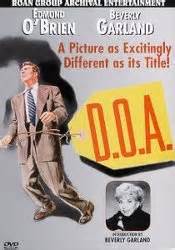
I signed up for an online course in film noir put on my Turner Classic Movies (TCM). As part of the process, they email me a film clip each day. Accompanying the clip is a discussion of the movie. The other day the film was DOA starring Edmund O'Brien. The clip was curated by a fellow named Richard Edwards. His take on DOA involved a general break down in order as chaos increased. He wrote:
As Robert Porfirio mentions in his article on Existential motifs, in a film like D.O.A.
we find ourselves in a meaningless, purposeless and absurd world. The threat of imminent death hangs over this film. While we (and the film's staging and camerawork) are constantly on the move, we have no certainty of our destinations. Walking into Los Angeles's police department, as Frank Bigelow (Edmund O'Brien) does at the beginning of this film, might be less of a quest for solutions and justice than a moment of resignation to the inevitable. The police station seems less of a place of security and more like a bureaucratic way station with long dimly lit corridors. We are beginning to find ourselves, over and over again, at the end of the line in the 1950s. Nowhere is this more clearly illustrated than in the plight of Frank Bigelow. As in the other Daily Doses this week, we (as well as audiences of that time) still want to hold the belief that there is somebody in charge of this decaying and violent world, but "a sense of malaise" and dread has now spread and doesn't seem containable. We can longer be certain that the police, or detectives, or ordinary people can hold back the anxiety and paranoia of the 1950s
When I read that description, I thought: Exactly. That is precisely what I have been trying to convey in all the Hofmann/Garvin novels (indeed, all my novels.) The two detectives spend their days trying to make sense out of a senseless world. Without intending to do so, they are on the front line of the battle against entropy, the last hope for order. Think of the novel Heroes in this setting and compare it to the classic hero's quest. Think of Smoke, where the arson fires get more and more complicated that they cannot be anything short of supernatural. Against such a destructive force, we send out two men, two ordinary men who try to make sense of it all.
Sadly, it looks like Robert Porfirio's 1976 essay No Way Out: Existential Motifs in the Film Noir,” is not readily available, Too bad: sounds like a great read.
NPR had another one of those "only in Detroit" stories this week. This one was about the so-called land bank in Detroit. According to NPR, the land bank in the Motor City takes ownership of properties that no one else wants. At present, there is a modest 88,000 properties available. This amounts to a staggering one-quarter of all the property in Detroit. You need to take a moment to let that number take hold in your mind. Try to think of any other place where not only is fully one fourth of all the property abandoned, it is owned by the land bank because absolutely no one else wants it. To their credit, the land bank is trying to find suckers to buy these places. The current plan is to offer discounts to City workers. So far, the land bank has sold 300 parcels. Let's see, 300 into 88,000 means that the last plot will sell sometime around when the sun burns out. Little wonder, too. Even if you bought a house from the land bank for $100.00, you are just getting a headache. You would have to drop tens of thousands of dollars into the place just to make it livable. Then the tax collectors will be knocking on your door (if you have one.) The first time you leave your neighborhood to go grocery shopping in the suburbs (remember, no chain grocery stores anywhere in Detroit), the local vandals are going to go in and steal every last thing you put into your new house.
When you hear stories about Detroit coming back because a hip restaurant opened downtown, keep the land bank in mind. When they get down to around only 50,000 or so abandoned parcels that no one will buy, maybe we can pop the Champagne corks.
NPR Story On Detroit Land Bank
Shop Now For Your New Home
It's almost as if the watch maker in Detroit could not resist the obvious when he set up shop in Detroit. Why not go for the punch line when naming your company? I say that because it appears that national writers checking in on the Motor City are obsessed with the fact that a small company is making a few thousand watches there. The latest to run down this rabbit hole is Joe Nocera in the New York Times. He wrote an op-ed piece that the Times published on June 2, 2015. The thesis of Nocera's article seems to be that Detroit is coming back to life. Why? Because Shinola has less than 400 employees making fewer than 200,000 watches a year in Detroit. And it's not just the New York Times. The National Geographic magazine ran an article about Detroit in their May, 2015 edition. As with the Times, National Geographic is besides itself in wonder at the comeback for the Motor City. This time it is because a few hardy souls have started a few micro-businesses here and there. Stories like this are filled with condescension. It's like hearing the effusive praise an adult gives a small child for having dressed himself. These stories are also insulting to the people of Detroit. By supposedly praising the "can-do" spirit of the few people still there, these writers just wish away the crippling decline of the City. Sure, the whole place is a vast, ruined wasteland. But, how about them watches? Is it possible that people like Nocera literally cannot tell shit from Shinola? How degrading for a City that was the arsenal of democracy, one of the wealthiest and most beautiful places in America. How smug for a few out of towners to pat the people there on the head and say, we really like what you have done with the place. Forget the 80% of the population who fled. Ignore the tens of thousands of acres of abandoned land covered with burned-out structures, like some sort necrotic pox. I think this is how the dying must feel when silly relatives and friends keep telling them how good they look. Trust me, those doctors don't know a thing: you are going to beat this. Mark my words.
If there is way back for Detroit, which is doubtful, it has to begin with an honest assessment of how bad it really is there. No company in the world can sell enough watches to change the fate of the place. So, if you want to help, stow your blithe, condescending praise and offer some real solutions.
Nocera's Nonsense
National Geographic Article on Detroit
Meridian is working its way towards publication. Teddi Black and I are working on the cover. I can't say for sure when, but you should be able to get the book from Amazon within a month. An old-time song called Forget Me Not appears throughout the novel. If you would like to listen to it, you can do so at the link below. You will need Real Player, which is available for download for free.
Forget Me Not
Back in January of this year, I promised to make public the ancillary files I created while writing my novels. It took a while, but I finally got around to it. If you want to know more about my process of writing these books, you can click the link below. You can look at the character sketches and timelines and other files for each novel. This includes Meridian, which I have not even published yet. It does not include Home, which I won't have out until this fall.
Happy reading. Let me know if you find anything notable or interesting.
Click Here For The Documents
I am not sure if anyone reads much anymore. I am even less certain that people read classics of American literature. This is notably true for long, complicated novels. Which means there is a very good chance that nobody is reading the novels of Theodore Dreiser. That is a pity.
For whatever reason, literary titans go in and out of favor. Some never achieve a great deal of fame. I think that prominent in that group is Dreiser. He wrote at least two book that are among the greatest of all American novels: Sister Carrie (1900) and An American Tragedy (1925). You may be generally aware of American Tragedy because it was the basis of the movie A Place in the Sun (1951). As wonderful as that film is, the book is even better. Notably, both Carrie and Tragedy feature men who find themselves in impossible positions with a woman in their lives. In each case, the role of fate is central to what happens. In Carrie, it is the safe swinging shut after Hurstwood takes the money. In Tragedy, is it the tipping of the boat on the lake where Clyde Griffiths took the pregnant Roberta. Both Hurstwood and Griffiths are overcome by the absurd, by random chance. In that sense, I think that Dreiser anticipated some of the literature of the later 20th Century that focuses on how random acts in a chaotic world can cause significant events to unfold. See if you don't hear echoes of Tragedy in The Stranger by Albert Camus.
Even if you are not persuaded by my literary arguments, you should still read Dreiser. His novels are damn good stories if nothing else. The scenes at the end of Tragedy where Griffiths' mother is trying to save him from execution are extraordinary. So, too, are the scenes of Hurstwood after he has come to ruin in New York. If you seek out these two novels, be sure to get the restored versions. Dreiser's editors had to impose a lot of cuts to get the books onto shelves. These forced edits did not serve the stories. Read them in the original if you can. Dreiser was a huge influence on me. I see evidence of his style and technique in almost everything I wrote. Check him out. I think you will be very glad you did.
I finally came to the point where I could not tolerate the lousy vision in my right eye any longer. I went to see a very fine eye doctor who told me I had cataracts and needed surgery. That was good news to me. I have never been able to see well. The cataract surgeon told me that with a new lens implant, I might not need to use eye glasses at all, save to read. That seemed a wondrous notion, almost like magic and not science. I underwent the procedure on the right eye on April 13, 2015. Within a few hours, I could see out of that right eye. I am sitting at about 20/30, uncorrected. That may not seem like much, but if you have had poor vision for your whole life, it is worth celebrating. I am going to have my left eye done on April 27, 2015. So, yes, that means that for two weeks I have two different corrections in my eyes. I am still utterly dependent on eye glasses on the left and have very clear vision on the right. So I am walking around with the right lens popped out of my eye glasses. My depth perception is off. I have run into more things with my right shoulder and leg in the last ten days that I did the rest of my 54+ years. I keep thinking that this is some sort of metaphor: the ability to take in two different views of the world and harmonize them. But that idea is going nowhere. This is no metaphor--this is a pain in the neck. I trust that by next week my eyes will be back in sync and I will stop walking into door jams. If you have good vision, be sure to be grateful for it. If you don't, talk to an eye doctor. Maybe there is something to be done.
This month marks the 90th anniversary of the publication of F. Scott Fitzgerald's The Great Gatsby. I have often thought that Gatsby is one of those books so essential to American literature that you cannot imagine their absence. I would put Twain's The Adventures of Huckelberry Finn in that group, along with Absalom, Absalom by William Faulkner. Just take a moment to think of the size of the void left behind if these books did not exist. The extraordinary thing about Gatsby is how much Fitzgerald got out of so few words. In truth, Gatsby is a very brief novel. By some estimates, it is barely more than 47,000 words. Ana Karenina is more than seven times longer, for example. But, oh what Fitzgerald did with his carefully chosen words. No other work of American literature better punctures the myth of the American dream. We see Gatsby gathering great wealth and prestige (at who knows what cost) all in pursuit of a goal not worth having: the vapid, childlike Daisy Buchanan. The Green Light, indeed. The message of the book must still resonate. Scribner is still selling 500,000 copies a year. If by some chance you have never read The Great Gatsby, do so now. It will change the way you feel about any number of things, mostly about the folly of the American dream.
I am happy to report that Meridian is out for proofreading. I also got in touch with Teddi Black to have her start cogitating over a cover design. I suspect it is still going to take a month or two, but Meridian is getting closer to publication. I will keep you updated as I go along. I will announce, of course, when the book is available on Amazon and CreateSpace.
If you have not yet read it, I suggest you take a look at a long travel piece that appeared in the New York Times recently. Karl Ove Knausgaard, the Norwegian writer, accepted an offer from the times to come to America and write about his time here. Most improbably, Knausgaard ended up spending a large part of his time in Detroit. Though he had no particularly original takes on Motown, it is still interesting to read what he has to say. I think is must astonish foreigners to see Detroit. For most non-Americans, the USA represents everything that is new and polished and bright. But Detroit is none of those things. So how to reconcile your notions of America with square miles of abandon and ruin? You will have to read it for yourself. It is well worth the time.
My Saga by Karl Ove Knausgaard.
Today would have been the 90th birthday of Flannery O'Connor. She is among those American writers who have an outsized influence despite not being better known (another is Theodore Drieser, but more about him some other day.) O'Connor only lived 39 years. But, oh, what use she made of those years. Her novels, The Violent Bear It Away and Wise Blood are not great. I still consider them must reading, but they do not among the first rank of American novels. It was in her magnificent short stories that O'Connor found her place among the immortals. Some of her stories are so good as to sneak up on perfection. The characters she created to populate those stories are so vivid that they scarcely seem like fiction at all. Who could ever forget Manley Pointer in Good Country People? What a delicious character with such a perverse name. Think about it: Manley Pointer, the atheist Bible salesman. You had to be some sort of genius to come up with that. Pointer had good company with the likes of Tom Shiftlet in The Life You Save May Be Your Own and The Misfit in A Good Man Is Hard To Find. The common wisdom about O'Connor was that she was expressing her Catholic faith in her writings. I was never persuaded of that. It seemed to me that O'Connor was like one of her own characters: she was fascinated by vulgar, the violent, and the explicit. Though she tried to show had bad these people were, I submit that there was some part of their lifestyle that stimulated her. Regardless of how she came to write her wonderful stories, lets be ever so grateful she did.
Odds are pretty overwhelming that you have never heard of Queen of My Song by Stephen Foster. There is no reason for you to know about it. When I was first starting to write again, beginning with What'll I Do? I would play my Robert Shaw Chorale CD of the Stephen Foster Song Book. I think the songs worked as a form of hypnosis. The music blocked out all the other sounds and interruptions and I could just tap away at the keyboard, word after word. The switch from song to song told me where I was in my time. When I got to Steal Away I knew I was close to the end. I needed to start wrapping up whatever storyline I was working on. The hypnotic state would start to fade. I would type a series of capital X's across the screen. Below that, a few notes about what I wanted to say the next day. The following morning, I would be at the keyboard again. I deleted the X's and my notes and waited for the first few notes of Ring, ring de Banjo. With that, I was back somewhere in Detroit with Hofmann and Garvin and the endless shambolic lives they intersected with. I so liked Queen of My Song, that it's first two lines are the epigraph of Heroes. I think the words perfectly capture the sorrow of so many of the characters.
"I long for thee, must I long and long in vain?
I sigh for thee, whilst thou not come back again?"
If there was ever a movie version of Heroes, I would want that melody to be the Rachel Deming/Eddie Grimes love theme.
If you are curious, you can hear Queen of My Song here. https://youtu.be/BDyzt6Zc4vI
See if you don't agree about how haunting and elegiac it is.
You can buy the CD on Amazon.