The seventh and last William Theodore Clemmons novel has arrived. You can now purchase Home at Amazon in either paperback or ebook form. I want to thank Teddi Black for another outstanding cover. I really like the way the Home cover turned out. The off-kilter compass seeming to float in an eternal blue background is terrific. So, head over to Amazon and get your copy. Let me know what you think.
Link To Amazon To Buy Home.

Keep current with the author of Heroes, Smoke, Exile, City of the Dead, Harvest, and Meridian all now available on Amazon, Create Space, and Smashwords.
Monday, November 9, 2015

Wednesday, October 14, 2015
Home Is Nearer
The publication of my last novel, Home, is getting closer. I have the manuscript back from the proofreaders. Teddi Black is working on the cover. If things go well, perhaps the book will be available as soon as November. Keep checking back here for more developments. I'll have more to say about Home once we get it out there to the public. One interesting thing that occurred to me as I was reviewing the book was how autobiographical it is. By that I mean that Home is about a fellow who is lost and keeps walking through his neighborhood in Detroit. He is trying to figure out where he is and where belongs. He wants to know why something that had always been familiar is now foreign. I think this is a metaphor about what I did in writing these seven novels. Taken together, the books are a journey through Detroit, looking for meaning. In the last book, the journey ends. What started with the Hero's Quest in the first book, finally concludes. Little wonder that the idea for Home, or at least its conclusion, came to me while I was still writing Smoke. Even then, I suppose, I could see to the conclusion. I just needed to get there. As for finding meaning, time will tell.
Thursday, September 24, 2015
You Might Still Become Famous, But Forget About Getting Rich.
NPR had an interesting story about the struggles of literary writers to sell books. According to this report, the books on the short list for the Man Booker prize in England are simply not selling. A well-known serious writer named Anne Enright sold only 9,000 copies of her latest book in England. Tom McCarthy, the author of Satin Island, sold 3,500 copies of that title. A literary agent named Jane Dystel claimed that for a literary author to sell 25,000 books would be "sensational." The decline in book sales seems congruent with a sped-up and more superficial world. I wonder how many readers are left who can commit to a lengthy novel that will challenge him or her to do such things as pay close attention and think deeply. That is hard to accomplish with your phone alerting you to a new Facebook update or email about every 20 seconds. Writing literary fiction in the 21st Century may prove to be an abstruse exercise done primarily for the sake of doing it. Fame, and apparently fortune, are not rewards for writing these days. The serious writer of this era may be creating works that are noted by an ever-smaller group of people, mostly academics. That said, there is no reason not to write literary fiction. Tell your story the best way you know how. Put it up on Amazon. Then go to work because that is the only way you are going to pay your rent.
NPR Story On Book Sales

NPR Story On Book Sales
Wednesday, September 9, 2015
More On Poor Harper Lee
As you will recall, the lawyer who handles the affairs for Harper Lee floated the idea over the summer than there might even by a third novel out there. This fine barrister, Tonja Carter, felt the need to call in an expert to determine if the manuscript pages she found were, indeed, a new novel. Sadly for Ms. Carter, and all the millions of dollars she envisioned flowing towards her, the expert would not play along. The expert, James S. Jaffe, found that the manuscript was just another version of To Kill A Mockingbird. It is nice to see one person with some integrity involved in this sordid mess. So, at least until Ms. Carter finds another manuscript in Harper Lee's cookie jar, this should be the end of any additional titles coming out.
News Flash: Now there is talk of another Harper Lee book, this one a true crime story.
The most interesting question for Ms. Carter might be this: if Harper Lee is really in her right mind, why did you have to bring in Mr. Jaffe? Why didn't Mr. Jaffe speak with Harper Lee? I mean, isn't that the most straight-forward way to address the question of the third novel? Did Harper Lee go from compos mentis to addled as soon as the checks started coming in for Go Set A Watchman?
If Carter is pulling these sorts of stunts while poor Harper Lee is still alive, I wonder what happens when Harper Lee dies? I wonder just how many books Carter has that she will attribute to Harper Lee. This is a disgusting saga that highlights the worst of human behavior. Ms. Carter, can you heed the words of Joseph N. Welch from all those years ago: Have you no sense of decency, sir? At long last, have you left no sense of decency?
NYT Article On Harper Lee's Putative Third Novel
News Flash: Now there is talk of another Harper Lee book, this one a true crime story.
The most interesting question for Ms. Carter might be this: if Harper Lee is really in her right mind, why did you have to bring in Mr. Jaffe? Why didn't Mr. Jaffe speak with Harper Lee? I mean, isn't that the most straight-forward way to address the question of the third novel? Did Harper Lee go from compos mentis to addled as soon as the checks started coming in for Go Set A Watchman?
If Carter is pulling these sorts of stunts while poor Harper Lee is still alive, I wonder what happens when Harper Lee dies? I wonder just how many books Carter has that she will attribute to Harper Lee. This is a disgusting saga that highlights the worst of human behavior. Ms. Carter, can you heed the words of Joseph N. Welch from all those years ago: Have you no sense of decency, sir? At long last, have you left no sense of decency?
NYT Article On Harper Lee's Putative Third Novel
Wednesday, September 2, 2015
Steven King, Of All People, Wonders: Can A Novelist Write Too Many Books?
In a recent column in the New York Times, Steven King ponders the question of how many books is too many for a writer who wants to be taken seriously. With at least 55 titles under his belt, you can guess what King thinks about this issue. But I have to take the other side of the argument. 55 novels is just too many for any serious writer. Way, way too many. I cannot imagine anyone with something profound to say would need 55 attempts to get his or her point made. What is more likely for a writer getting much past about 10 novels is that he or she is going to just tell the same story over and over again. The creative mind is tricky in coming up with new ways to illustrate an idea. Though I do not write anymore, ideas still flow through my imagination all the time. The more I dwell on these ideas, though, the sooner I recognize them as themes and stories that I have already explored. The other danger for writers who persist in putting out book upon book is diminishing skills. To write well takes extraordinary mental energy and concentration. These are two things that time steals away, no matter how much you resist. I remember reading William Faulkner's Snopes trilogy. The Hamlet is classic Faulkner, with sentences that last for pages and an intensity that all but burns the eyes of the reader who beholds the words. But by the time you get to The Mansion, his energy is spent. The Mansion meanders where The Hamlet charged. I'm sure Faulkner had the same desire to tell stories at the end of his career as he did at the beginning. But no mortal could keep it up forever. If you have an important story to tell, do so. Once you have accomplished this, put down the pen and write no more. Better one great book than 55 very good ones.
Steven King And The 55 Novels
Steven King And The 55 Novels
Tuesday, July 28, 2015
Joe Nocera And Harper Lee
You might recall that I recently called out New York Times's Op-Ed writer Joe Nocera. This pertained to his foolish reasoning that the presence of a small watch maker in Detroit signaled some great come back for that city. Perhaps I was too hard on Nocera. It looks like he nailed the Harper Lee situation. He had the courage to describe frankly what those around Harper Lee did to her when the published the first draft of To Kill A Mockingbird as a new novel. In pertinent part, Nocera observed:
So perhaps it’s not too late after all to point out that the publication of “Go Set a Watchman” constitutes one of the epic money grabs in the modern history of American publishing.
Atta boy, Joe. Keep calling them like you see them. Maybe there is hope for you after all.
Nocera's Gem
So perhaps it’s not too late after all to point out that the publication of “Go Set a Watchman” constitutes one of the epic money grabs in the modern history of American publishing.
Atta boy, Joe. Keep calling them like you see them. Maybe there is hope for you after all.
Nocera's Gem
Wednesday, July 15, 2015
I Wish I Had Said That
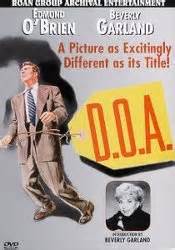
I signed up for an online course in film noir put on my Turner Classic Movies (TCM). As part of the process, they email me a film clip each day. Accompanying the clip is a discussion of the movie. The other day the film was DOA starring Edmund O'Brien. The clip was curated by a fellow named Richard Edwards. His take on DOA involved a general break down in order as chaos increased. He wrote:
As Robert Porfirio mentions in his article on Existential motifs, in a film like D.O.A.
we find ourselves in a meaningless, purposeless and absurd world. The threat of imminent death hangs over this film. While we (and the film's staging and camerawork) are constantly on the move, we have no certainty of our destinations. Walking into Los Angeles's police department, as Frank Bigelow (Edmund O'Brien) does at the beginning of this film, might be less of a quest for solutions and justice than a moment of resignation to the inevitable. The police station seems less of a place of security and more like a bureaucratic way station with long dimly lit corridors. We are beginning to find ourselves, over and over again, at the end of the line in the 1950s. Nowhere is this more clearly illustrated than in the plight of Frank Bigelow. As in the other Daily Doses this week, we (as well as audiences of that time) still want to hold the belief that there is somebody in charge of this decaying and violent world, but "a sense of malaise" and dread has now spread and doesn't seem containable. We can longer be certain that the police, or detectives, or ordinary people can hold back the anxiety and paranoia of the 1950s
When I read that description, I thought: Exactly. That is precisely what I have been trying to convey in all the Hofmann/Garvin novels (indeed, all my novels.) The two detectives spend their days trying to make sense out of a senseless world. Without intending to do so, they are on the front line of the battle against entropy, the last hope for order. Think of the novel Heroes in this setting and compare it to the classic hero's quest. Think of Smoke, where the arson fires get more and more complicated that they cannot be anything short of supernatural. Against such a destructive force, we send out two men, two ordinary men who try to make sense of it all.
Sadly, it looks like Robert Porfirio's 1976 essay No Way Out: Existential Motifs in the Film Noir,” is not readily available, Too bad: sounds like a great read.
As Robert Porfirio mentions in his article on Existential motifs, in a film like D.O.A.
we find ourselves in a meaningless, purposeless and absurd world. The threat of imminent death hangs over this film. While we (and the film's staging and camerawork) are constantly on the move, we have no certainty of our destinations. Walking into Los Angeles's police department, as Frank Bigelow (Edmund O'Brien) does at the beginning of this film, might be less of a quest for solutions and justice than a moment of resignation to the inevitable. The police station seems less of a place of security and more like a bureaucratic way station with long dimly lit corridors. We are beginning to find ourselves, over and over again, at the end of the line in the 1950s. Nowhere is this more clearly illustrated than in the plight of Frank Bigelow. As in the other Daily Doses this week, we (as well as audiences of that time) still want to hold the belief that there is somebody in charge of this decaying and violent world, but "a sense of malaise" and dread has now spread and doesn't seem containable. We can longer be certain that the police, or detectives, or ordinary people can hold back the anxiety and paranoia of the 1950s
When I read that description, I thought: Exactly. That is precisely what I have been trying to convey in all the Hofmann/Garvin novels (indeed, all my novels.) The two detectives spend their days trying to make sense out of a senseless world. Without intending to do so, they are on the front line of the battle against entropy, the last hope for order. Think of the novel Heroes in this setting and compare it to the classic hero's quest. Think of Smoke, where the arson fires get more and more complicated that they cannot be anything short of supernatural. Against such a destructive force, we send out two men, two ordinary men who try to make sense of it all.
Sadly, it looks like Robert Porfirio's 1976 essay No Way Out: Existential Motifs in the Film Noir,” is not readily available, Too bad: sounds like a great read.
Subscribe to:
Posts (Atom)